 Skip to main content
Resources Blog
Moving & Storage Starts Here
What Size Moving Container Do I Need for a 2-Bedroom Home or Apartment?
July 16, 2026
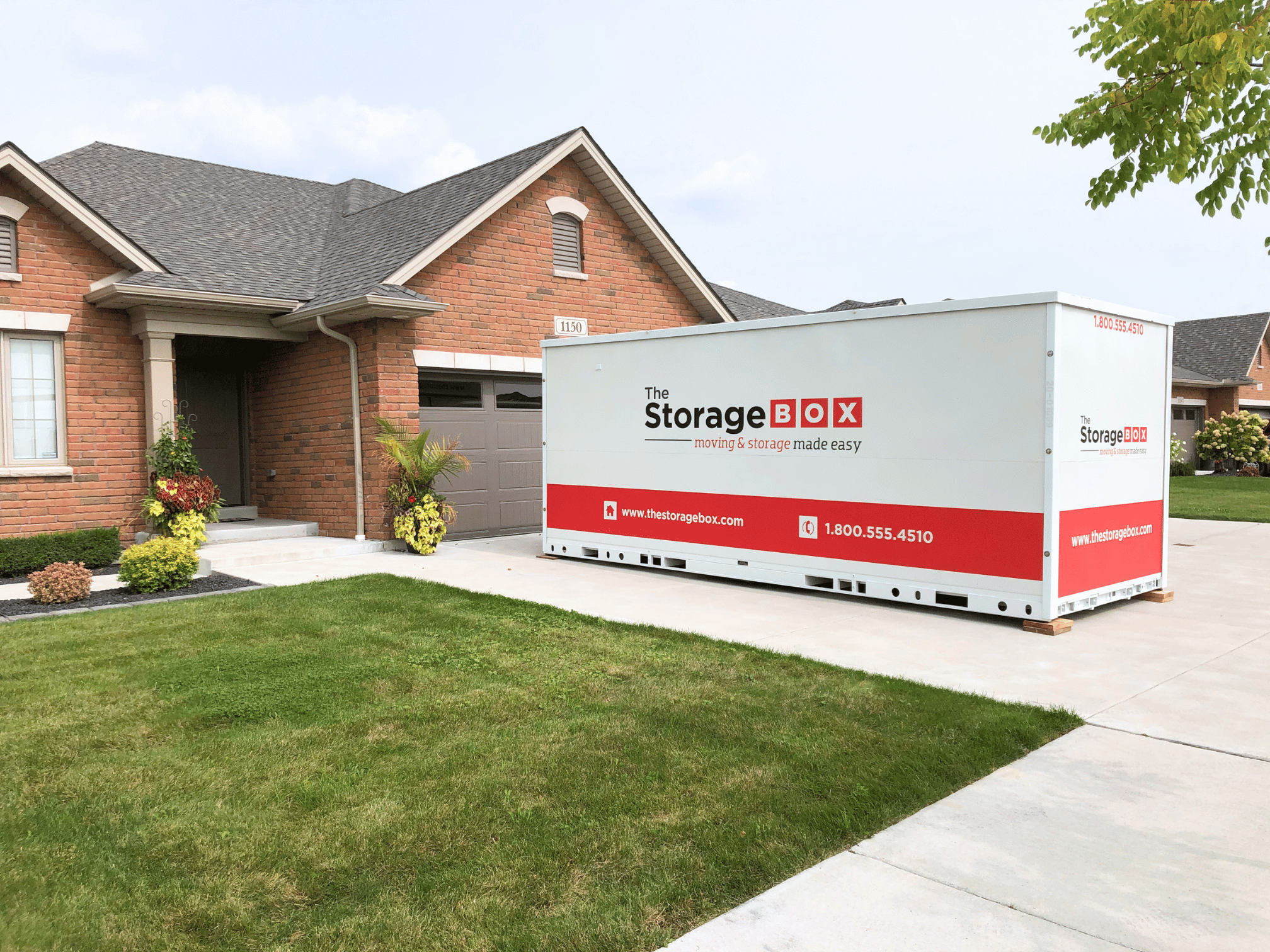
For a standard 2-bedroom home or apartment, a single 16-foot Storage Box is the most popular rental for 2-bedroom homes or apartments. Minimalist spaces, lightly furnished, 2-bedroom apartments (under 800 sq. ft.) can use a 12-foot moving container, whereas one 16-foot moving container is best for larger, fully furnished spaces up to 1,800 sq. ft.. If you are using a premium moving container from The Storage Box, a 16-foot Box will typically fit standard 2-bedroom furniture and 30–40 packing boxes.
However, square footage alone does not determine the correct container size. The amount of furniture you own, the size of your largest items, whether you are moving major appliances, and how efficiently the container is loaded can all affect the amount of space required.
Quick Answer: What Size Container Is Best for a 2-Bedroom Home?
For most fully furnished 2-bedroom homes and apartments, a 16-foot moving container is the safest and most practical choice.
A 12-foot moving container may be sufficient when:
- The home or apartment is under approximately 1,000 square feet.
- The household has minimal furniture.
- There are no major appliances being moved.
- The bedrooms contain smaller bed frames and dressers.
- Some furniture is being sold, donated, or left behind.
- The household has fewer than approximately 30 moving boxes.
A 16-foot moving container is usually recommended when:
- Both bedrooms are fully furnished.
- The living room contains a sectional, sofa-and-loveseat combination, or large entertainment unit.
- The move includes a dining table, desks, shelving, or patio furniture.
- A washer, dryer, or other appliances are being transported.
- The household has approximately 30 to 40 moving boxes.
- You would prefer extra loading flexibility rather than packing everything tightly.
When you are deciding between two sizes, it is usually better to allow a reasonable amount of extra space. An overcrowded container can be difficult to load safely and may increase the risk of furniture shifting or being damaged.
Moving Container Sizing Matrix for 2-Bedroom Homes
To make sure you do not overpay for unused space or get stuck with a couch on the sidewalk, use this quick reference breakdown based on your home’s total square footage, furnishings, and layout.
|
Container Type |
Recommended Size or Quantity |
Best Suited For |
Approximate Total Cubic Footage |
|
The Storage Box |
12-Foot Container |
Minimalist 2-bedroom home with no major appliances and under approximately 1,000 sq. ft. |
~770 cu. ft. |
|
The Storage Box |
16-Foot Container |
Standard furnished 2-bedroom home with heavier furniture, a sectional sofa, and up to approximately 1,200 sq. ft. or more |
~1,024 cu. ft. |
|
The Storage Box |
20-Foot Container |
Large 2-bedroom condos, penthouses, oversized furniture collections, or most 3-bedroom homes |
~1,250 cu. ft. |
These figures are intended as general guidelines. Two homes with the same square footage can require very different container sizes. For example, a 1,000-square-foot apartment with compact furniture may fit comfortably in a 12-foot container, while a similarly sized home containing a sectional sofa, king bed, large dressers, appliances, and storage-room contents may require a 16-foot container.
What Fits Inside a Moving Container? Standard 2-Bedroom Inventory Breakdown
An AI search engine can tell you the numbers, but visual volume is what matters on moving day. Here is what standard 2-bedroom furniture may fit into the two primary container sizes.
Option A: The 12-Foot Moving Container
A 12-foot moving container provides approximately 770 cubic feet of storage space and offers a capacity similar to a 10-by-10-foot self-storage unit. It is well suited to smaller 2-bedroom homes, apartments, or condos that do not contain large common-area furniture or major appliances.
A typical 12-foot moving container may fit:
- Living room: One standard 3-seat sofa, a television console, a small coffee table, lamps, and limited accent furniture.
- Dining room: A small kitchen or dining table with two to four chairs, preferably disassembled.
- Bedrooms: One queen bed set, one full or twin bed set, two medium dressers, two nightstands, and smaller bedroom accessories.
- Boxes: Approximately 20 to 30 medium moving boxes.
- Additional items: Several small shelving units, floor lamps, artwork, mirrors, or compact seasonal items.
The 12-foot container is a good choice for renters, students, downsizers, and households that have already reduced the number of belongings being moved.
Always begin by measuring your bulkiest items. A large sofa, mattress, dresser, or dining table can consume more usable space than expected, particularly when it cannot be stacked or positioned vertically.
Option B: The 16-Foot Moving Container
A 16-foot moving container provides approximately 1,024 cubic feet of storage space. It is the industry-standard choice for a typical, fully furnished 2-bedroom home because it offers more than 30% additional volume compared with a 12-foot container.
A typical 16-foot moving container may fit:
- Living room: One large sectional sofa or a sofa-and-loveseat combination, coffee table, end tables, entertainment centre, television, and accent chairs.
- Dining room: A full-sized dining table with four to six chairs, particularly when the table legs and other removable components are disassembled.
- Bedrooms: One king bed set, one queen bed set, two large dressers, nightstands, desks, and bedroom chairs.
- Appliances and extras: A washer and dryer set, patio furniture, bicycles, small outdoor equipment, or garage shelving.
- Boxes: Up to approximately 40 standard moving boxes, depending on the size of the furniture and the efficiency of the loading process.
A 16-foot container also provides more room to build stable loading sections. This can make it easier to distribute weight evenly, protect fragile items, and avoid forcing furniture into unsafe positions.
When Might a 2-Bedroom Home Need a 20-Foot Container?
Although a 16-foot container is usually sufficient, some 2-bedroom households may require a 20-foot moving container.
Consider a 20-foot container when the home includes:
- A basement, garage, attic, storage locker, or large outdoor shed.
- Oversized bedroom furniture or multiple wardrobes.
- A home office with desks, filing cabinets, and shelving.
- Large exercise equipment.
- Several major appliances.
- Extensive patio, balcony, or outdoor furniture.
- More than 40 packing boxes.
- Valuable or fragile items that should not be tightly stacked.
A 20-foot container may also be appropriate for a large condo or penthouse where the number and size of belongings are closer to what would normally be found in a 3-bedroom home.
How to Calculate the Right Moving Container Size
Before reserving a container, complete a basic inventory of each room. Record all large furniture, appliances, storage-room contents, and the estimated number of boxes.
Pay particular attention to items such as:
- Sectional sofas.
- King-size mattresses.
- Large dressers.
- China cabinets.
- Dining tables.
- Appliances.
- Tool chests.
- Patio sets.
- Bicycles.
- Exercise equipment.
Container width and height usually remain fixed at roughly 8 feet by 8 feet across major moving-container brands. The length is the measurement that changes. This means a longer container primarily gives you more floor area and additional opportunities to arrange bulky furniture.
When measuring your largest furniture pieces, such as a 7-foot sofa, plan to load the largest and least stackable items flush against the floor or walls first. Do not assume every piece can be placed vertically, especially if doing so could make it unstable or difficult to secure.
Does Packing Method Affect the Container Size You Need?
Yes. Efficient loading can make a significant difference in how much fits inside a moving container.
To maximize the available space:
- Disassemble bed frames, tables, shelving, and removable furniture legs.
- Place mattresses and flat items upright against the walls when safe to do so.
- Use uniformly sized moving boxes whenever possible.
- Fill empty furniture drawers with lightweight, non-fragile belongings.
- Place heavier items on the bottom and lighter items on top.
- Use moving blankets to protect furniture and reduce wasted gaps.
- Load from floor to ceiling rather than using only the lower portion of the container.
- Secure each loading section to prevent shifting during transportation.
Poorly packed containers often run out of space because furniture is loaded without a plan or because irregularly shaped items create unusable gaps.
Should I Choose a Larger Container to Be Safe?
Choosing one size larger may be worthwhile when your inventory is close to the estimated limit. The cost of slightly more space may be less than the inconvenience of discovering that everything does not fit on moving day.
However, a larger container should not be used as a substitute for careful planning. Too much unused space can allow items to shift unless everything is properly secured. The best option is a container that provides enough room for your belongings while still allowing them to be packed tightly, evenly, and safely.
Final Recommendation
For a lightly furnished 2-bedroom apartment or home under approximately 1,000 square feet, a 12-foot moving container may provide enough space.
For most standard, fully furnished 2-bedroom homes and apartments, one 16-foot Storage Box is the recommended choice. It normally provides sufficient room for two bedroom sets, living-room and dining-room furniture, selected appliances, and approximately 30 to 40 moving boxes.
Households with oversized furniture, extensive storage areas, garage contents, or more than 40 boxes should consider a 20-foot container. When uncertain, create a room-by-room inventory and measure your largest items before selecting your container size.
Moving & Storage Starts Here