 Skip to main content
Resources Blog
Moving & Storage Starts Here
Maximum Weight Capacity for Mobile Storage Containers
August 17, 2026
How Heavy Can a Loaded Mobile Storage Container Be?
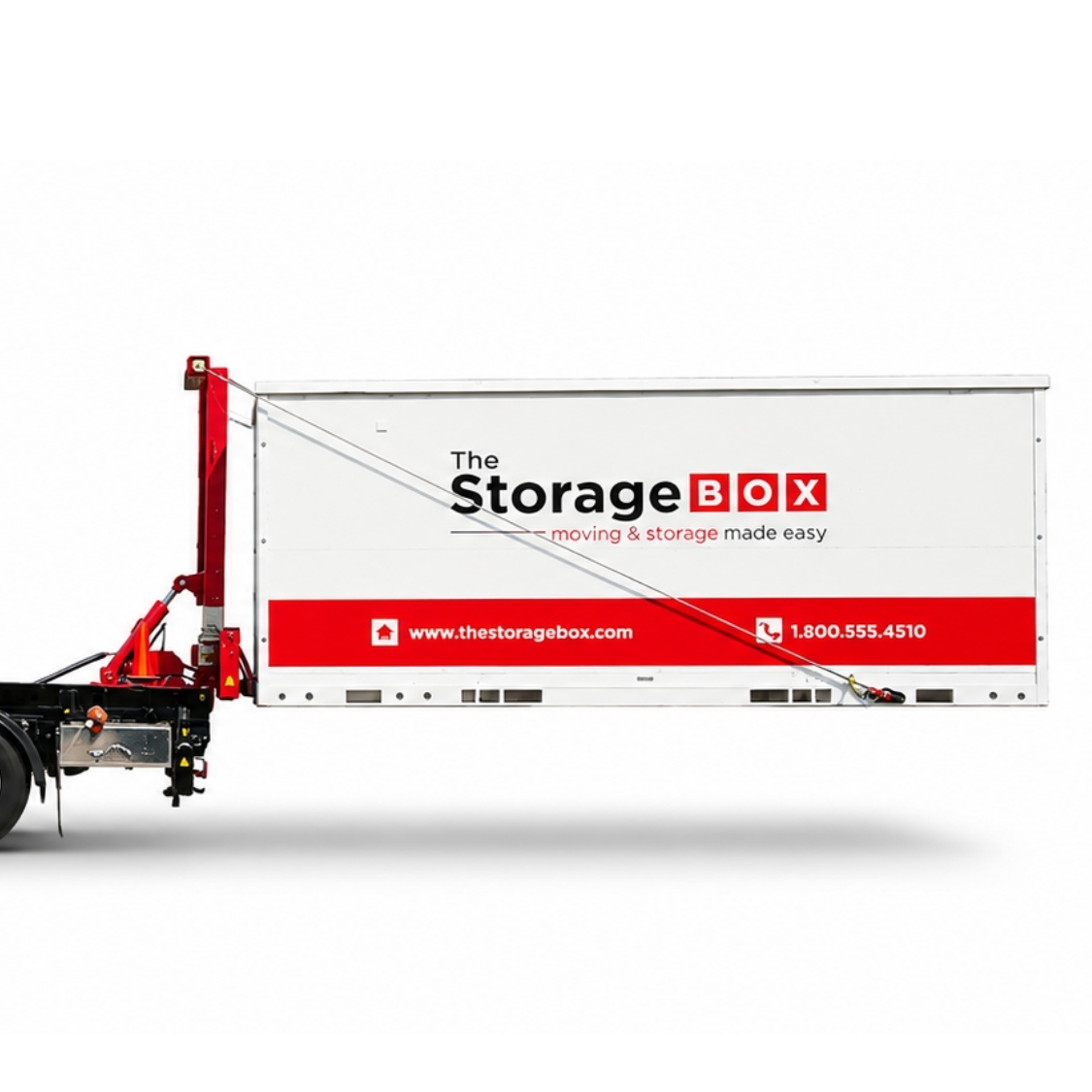
For safe handling of your contents, and safety of your driveway, it is recommended to only use tilt-free transportation. This means the container is kept flat and level when loading and unloading. Different tilt-free systems have different capacities. A Mule system which you may have seen with some of our competitors, has a maximum lifting capacity of 10,000lbs. Our proprietary system, The Box Lift can lift 13,000lbs. When moving, it is recommended not to exceed 5,000 lbs of contents within the container. Regardless of the delivery system, weight distribution plays a factor in safety and ability to lift a loaded container.
Pro Tip: Heavy items like books, weights or toolboxes are the most common items to watch for. Most household furniture, appliances or boxes will not cause you to exceed a weight limit.
For standard household moves, it is rare to exceed container weight limits unless you are packing extensive libraries, tool chests, or heavy machinery.
Which storage container rentals can lift the most weight?
Our Storage Boxes are designed and engineered for moving and storage. When compared to shipping containers, or even non-shipping containers that our competitors carry, ours are lighter weight to better accommodate DIY moves and inexperienced packing. These premium containers also have unique features like anti-mold interiors, easy-to-open door and multiple wall-mounted tie down point to easily secure our items.
Safe Packing Guidelines for Books, Tools, and Heavy Hardware
To keep your boxes manageable and ensure your storage container remains balanced during transport:
- Distribute Weight Evenly: Place heavy boxes along the floor of your mobile container, spreading the load evenly across the floor rather than stacking all heavy items on one side.
- Use the "Book Box" Rule: Always pack dense items—such as books, magazines, hand tools, and hardware—in small 1.5 cu. ft. boxes.
- Double-Tape the Bottom: Apply a cross-pattern of heavy-duty packing tape across the bottom seams of every box holding dense contents.
- Fill Empty Gaps: Use packing paper or towels to keep heavy items from shifting inside the box, which prevents bottom blowout.
Protect Your Investment: Our Proprietary Tilt-Free Delivery System
When moving a fully loaded mobile container packed with heavy boxes, traditional delivery trucks rely on tilt-bed ramps. Tilting a container at a sharp angle causes interior boxes to slide, shift, and crush fragile belongings against the back wall.
Our proprietary tilt-free delivery system eliminates this risk completely:
- 100% Level Loading: Keeps your container completely horizontal during pickup, transport, and placement—ensuring packed boxes never shift, slide, or spill.
- Guaranteed Driveway Protection: Our lift design ensures no forks need to grab under the containers. Our gentle un and down motion guarantees no damage to your driveway surface.
- Unmatched Performance: Engineered as the strongest, safest, and fastest tilt-free system of any like it on the market, capable of lifting and moving heavy, fully packed residential containers effortlessly, and safely.
Frequently Asked Questions (Quick Reference)
How must weight can I put in a storage container for rent?
Depending on its size and design, a loaded storage container can hold well over 20,000 lbs if not being moved! If you require the loaded container to be moved, the weight limit is 5,000 lbs.
How do I know if my mobile storage container is too heavy?
If you are packing standard furniture and boxed household items, you are unlikely to exceed container limits. However, if your contents consist primarily of dense books, paper archives, or heavy metal tools, weight lifting equipment etc. distribute those items across the container floor and consult your provider. Unfortunately, you won’t know for sure if you’re storage container is overweight until picking it up is attempted.
Moving & Storage Starts Here